
2026 | The Tenderness of Things
"Memories of the outside world will never have the same tonality as those of the home and, by recalling these memories, we add to our store of dreams; we are never real historians, but always near poets, and our emotion is perhaps nothing but an expression of poetry that was lost."
-- Gaston Bachelard, 1969
The Tenderness of Things is a museum of remixed curiosities, an excavation of memory, nostalgia, fantasy and the quiet mythologies of feminine identity, conjured through vintage objects from women's lives. Through sustainable art practices, Cunningham transforms discarded belongings from previous generations into sculptural memory totems, elevating domestic items into dignified shrines that celebrate memory and environmental care.
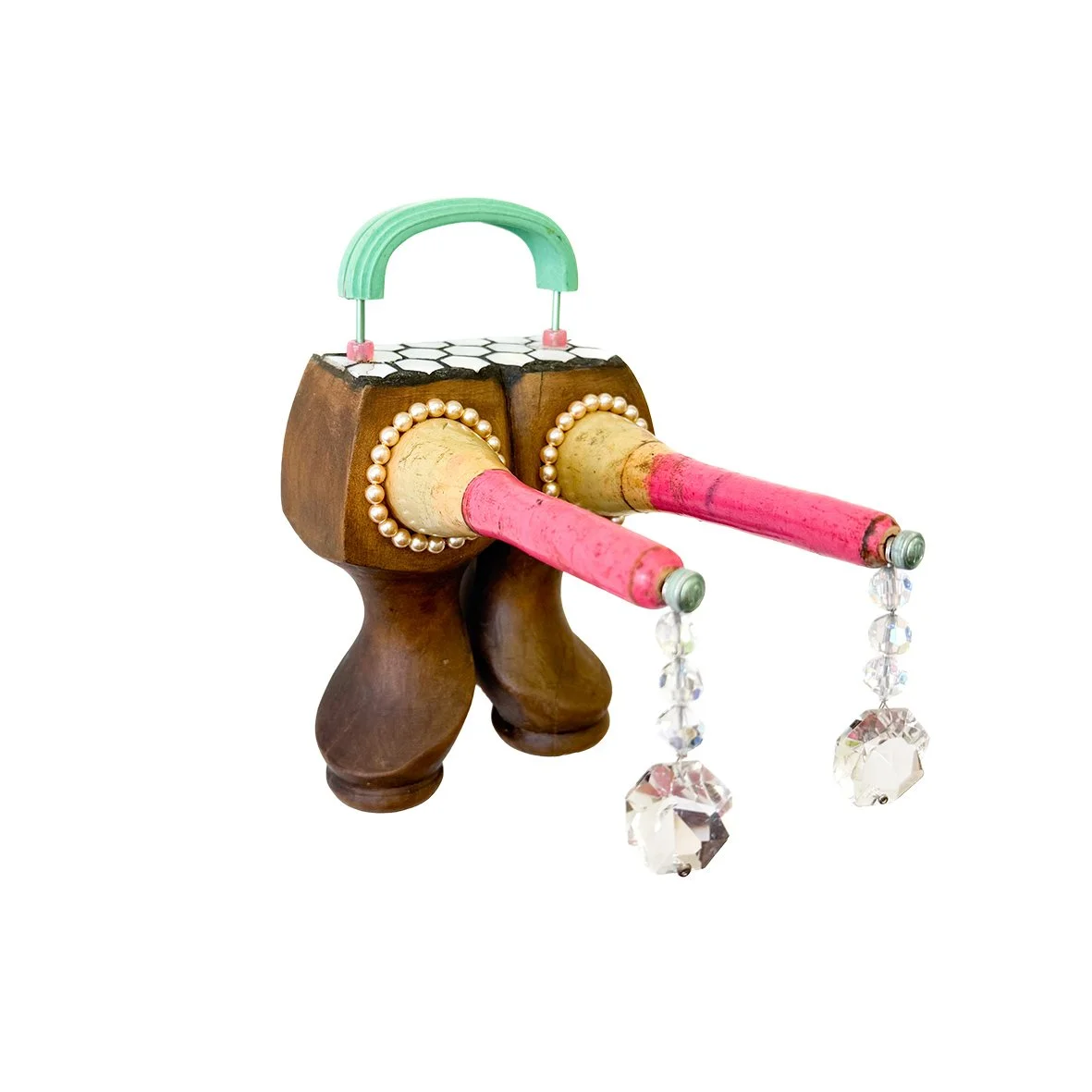
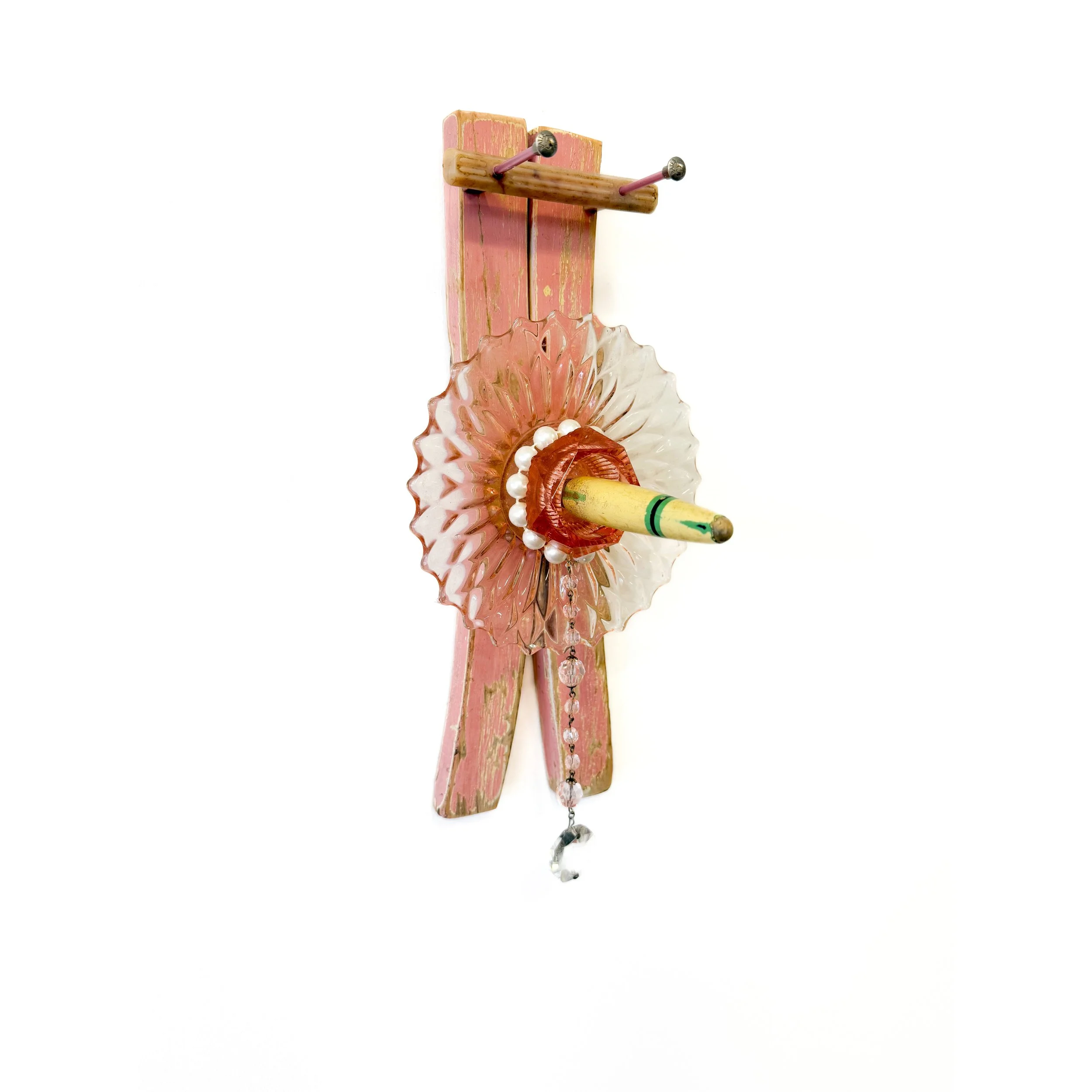
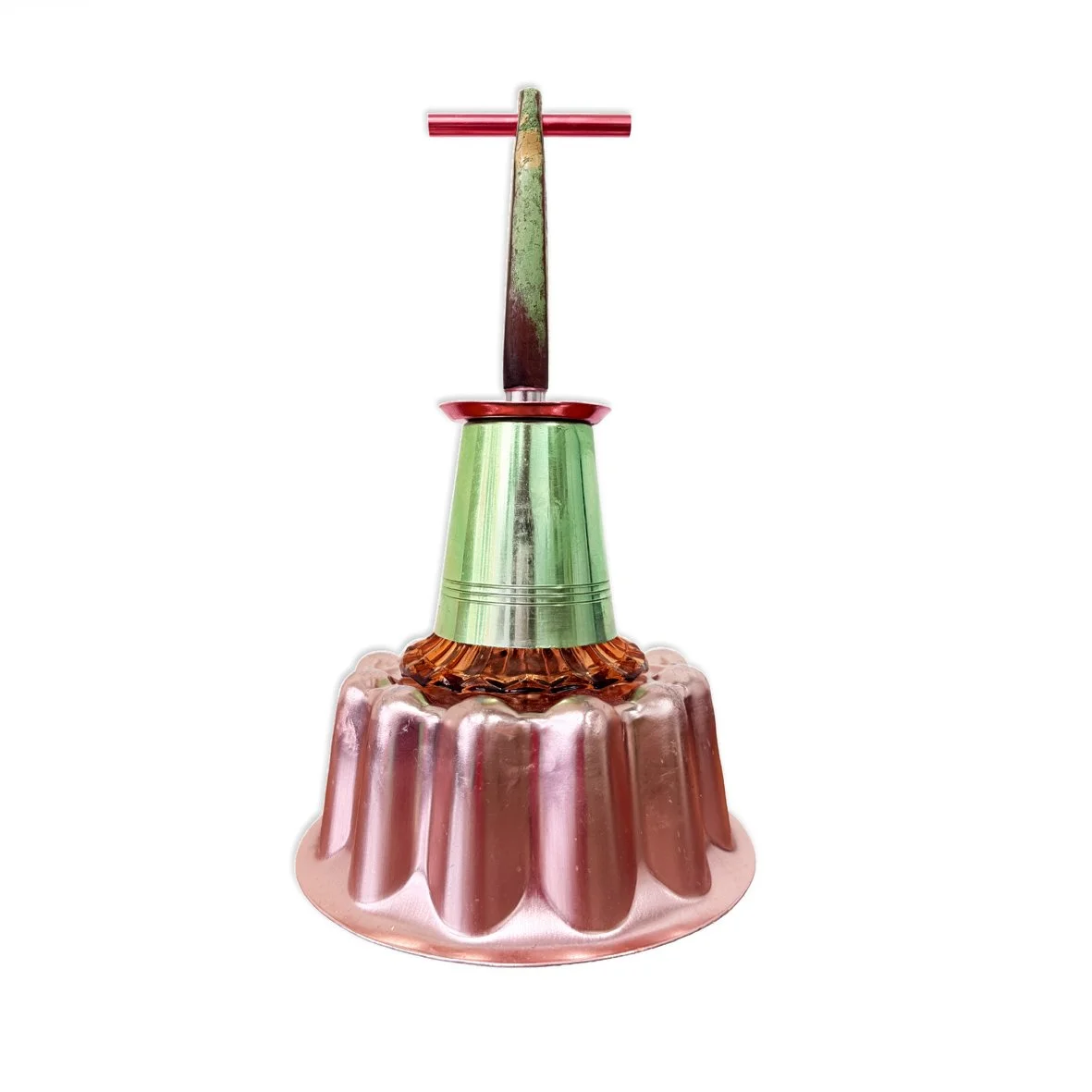
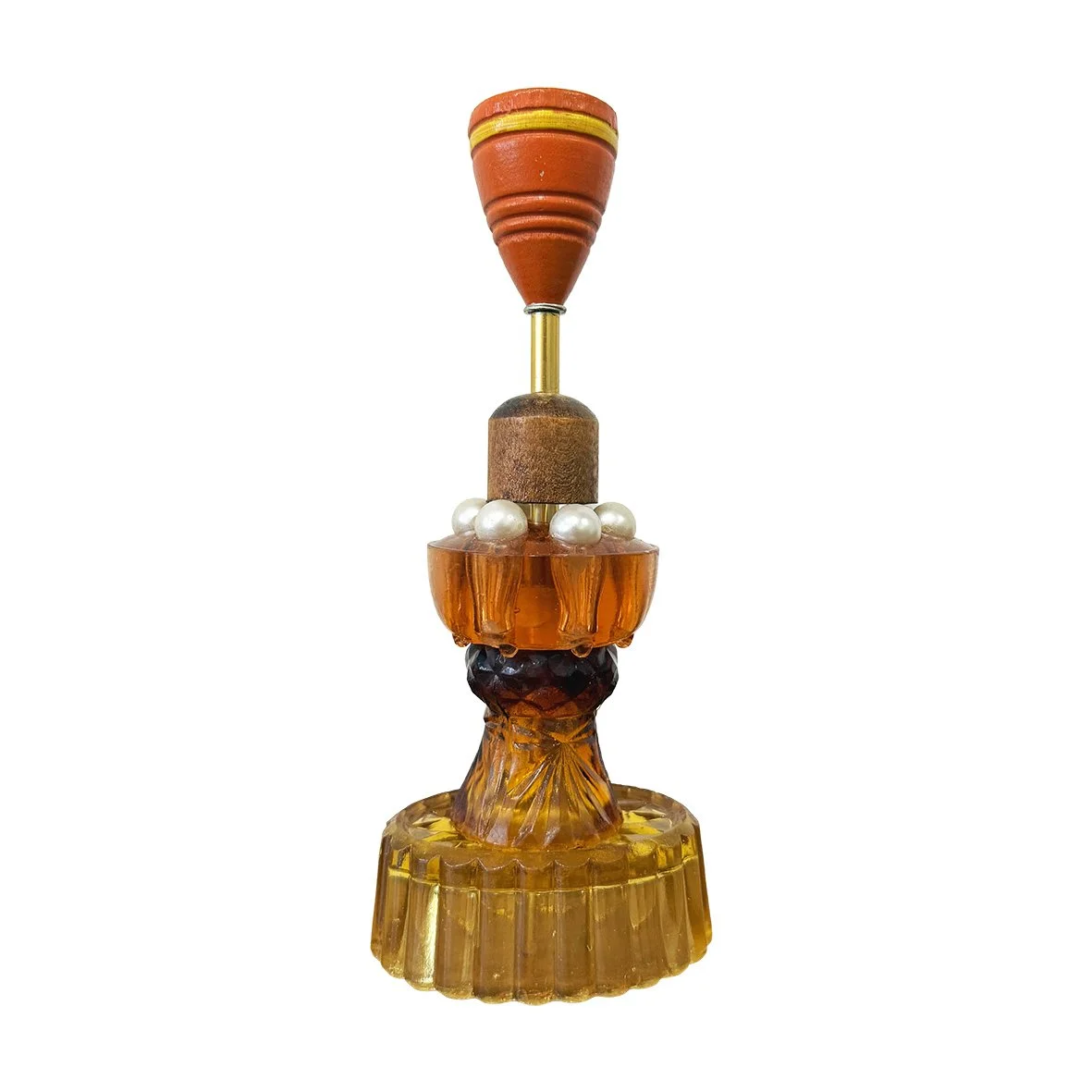
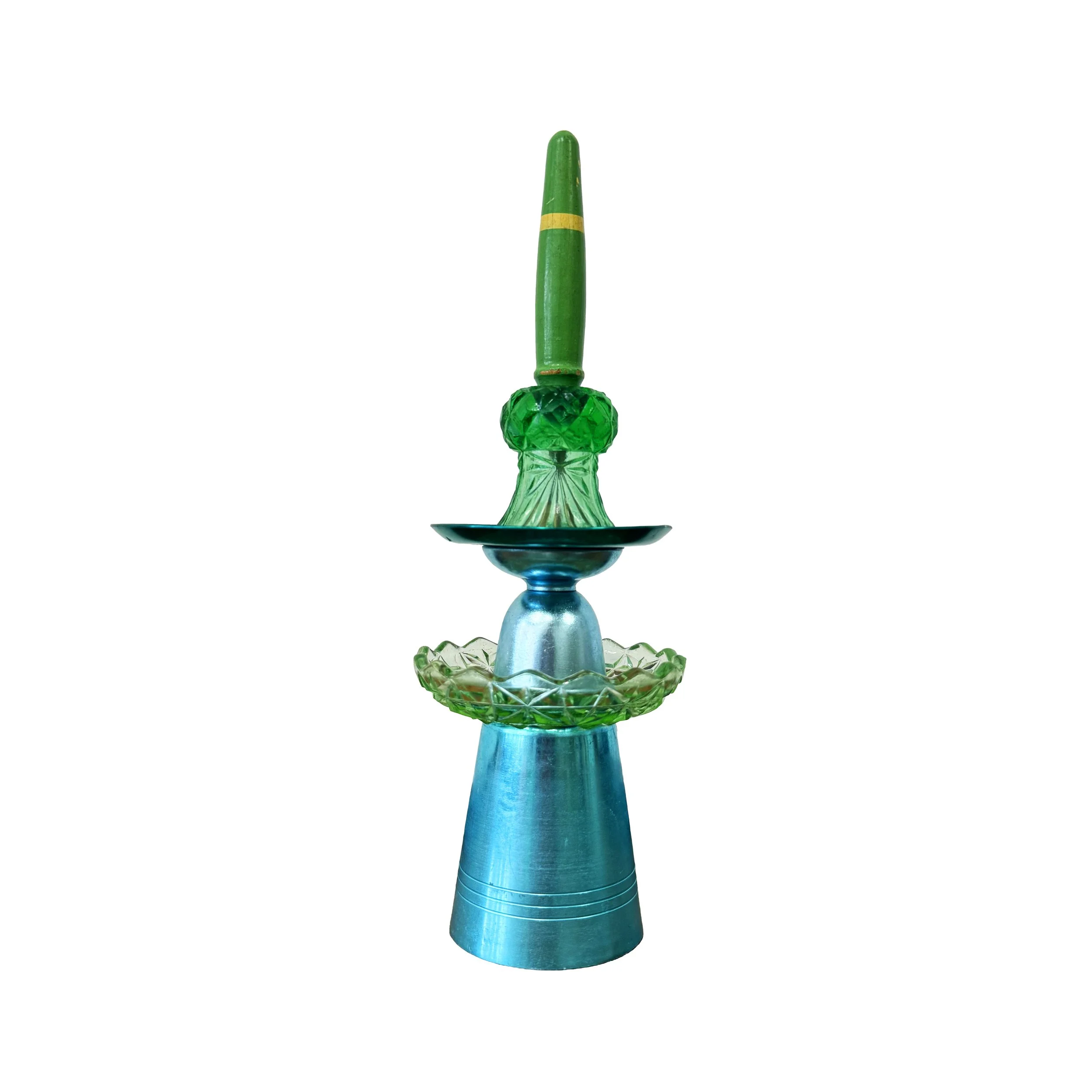
Like a rainbow bowerbird on a quest for authenticity, Cunningham hunts and collects coloured vintage objects from our cultural hoardings: worn wooden handles on serving spoons, testament to the invisible toil of housewives; pearl and crystal necklaces whispering of glamour and the promise of cocktail parties; children's toys to occupy little people while mothers worked; rainbow-coloured picnic cups for the Sunday Drive; suitcases packed with the dream of elsewhere. Each object a spirit token, held not for what it is, but for the self it once bore witness to.
In Cunningham's hands, the object is also raw material. The crystal bowl becomes a field of refracted light; the worn spoon a gesture of line and form; the pearl necklace a constellation of repeated mark. Through a considered manipulation of materiality, colour, and the principles of design, these domestic relics are transfigured into abstract compositions that hold their own as art. Colour becomes structure. Form becomes feeling. And in some works, the sculptures take on something more visceral still: anthropomorphic, bodily, almost sensual, forms that suggest the female figure without naming it, that carry the weight and curve and quiet eroticism of a body that has lived, laboured, and desired.
These objects map the many roles women were meant to occupy simultaneously: keeper of the home, nurturer of children, and object of desire, each expectation layered upon the last. What remains are the small daily acts of love and survival, and the objects that bore quiet witness to it all.
We live in an age of decluttering, where minimalism is held up as virtue and empty surfaces signal a well-ordered life. Yet this is, at its heart, a capitalist proposition: clear the old to make room for the new, in an endless cycle of consumption that profits from our willingness to forget. To release an object is to confront what it carried: the grief folded into a well-worn rolling pin, the lost future in a child's spinning top, the younger self preserved in a crystal vase that never saw another dinner party, the quiet dignity of a furniture leg that bore a dressing table's weight for years. Cunningham's work sits in tender resistance to this cultural pressure, insisting that before we discard, we bear witness. These objects are not clutter. They are an archive of lives lived, mostly by women, mostly unrecorded.
Against this tide of disposal, Cunningham collects. There is deep comfort in the sourcing and the holding, in the hunt through op shops and estate sales and the forgotten corners of markets, a kind of readiness, like a girl scout who knows that everything might come in useful, that treasure hides in overlooked places, that the discarded object is simply one waiting to be found by the right hands. The collection grows as an act of faith: that things matter, that stories deserve to be kept, that there is joy and purpose in gathering the scattered remnants of women's lives and bringing them home.
These are not merely things, they are surrogates for connection, keepers of identity, and proof that certain chapters of a life were real. To keep these things is to resist erasure. The fear beneath every full drawer and dusty shelf is the same: if I let this go, does that part of my life stop being true? Cunningham's practice answers that fear not with disposal but with transformation, upcycling and remixing these memory containers, narrating their stories through art, so that the meaning they carry can be witnessed, honoured, and released into new life.
This work is an inquiry into identity and stereotype. To be a single mother is to shatter the frame entirely. Cunningham became a single mother when her children were two months and two weeks old, the beginning of a life built entirely on her own terms. Her grandmother before her was left with four children, three and a baby, when her husband died, and ran a farm alone from that moment forward. She worked the land, raised the children, and held the whole thing together with the kind of competence that history rarely records. These women were whole. They were doing everything, because everything needed doing.
To be a single mother is to be the breadwinner and the primary carer, the cook and the labourer, the disciplinarian and the comforter, and to do it with a fierceness and creativity that reshapes what those roles can mean.. The objects in this exhibition know this story. The worn spoon handle speaks of strength. The pearl necklace, never worn, still waiting, holds the fullness of a life that refused to be only one thing.
Ultimately this work is a reclamation. Feminine identity has long been defined by others: by the roles assigned, the appearances maintained, the desires deferred. The Tenderness of Things insists on a different proposition. That the woman at the sink, the woman at the farm gate, the woman who did not sleep because the baby needed her and the bills needed paying, was forged by that life. These objects honour the extraordinary, unacknowledged power of feminine experience.
In doing so, the work explores how objects can find meaningful second lives beyond inheritance or disposal, an act of environmental generosity that prevents discarded objects from a demise in landfill, returning them to the world with renewed purpose and tenderness.
Sources
Bachelard, Gaston. The Poetics of Space. Translated by Maria Jolas. Beacon Press, 1969.
Leon, Gynelle. "You are what you keep: why we cling to clutter and how to free yourself of it." The Guardian, 2 May 2026. Concepts of spirit tokens, fear of erasure, objects as surrogates for connection, and the narration of objects as a means of release informed the revised artist statement above.
Winnicott, D.W. "Transitional Objects and Transitional Phenomena." International Journal of Psychoanalysis, vol. 34, 1953, pp. 89-97. Theoretical framework for objects as psychological anchors and surrogates for connection.